


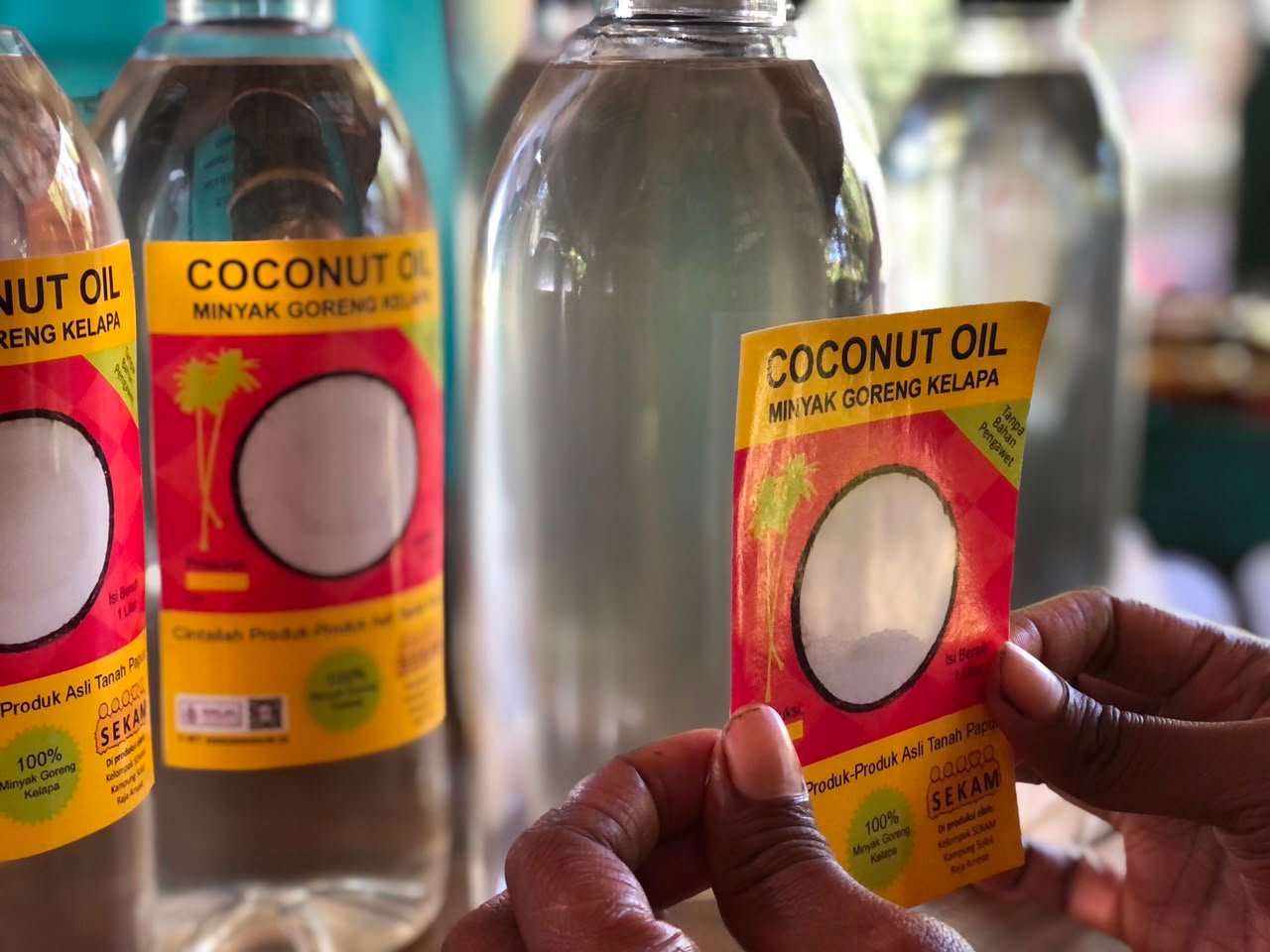
Across Southeast Asia, the coconut is far more than a tropical crop. In the Philippines, it is often called the “Tree of Life”— reflecting the important role coconut has long played in the food, livelihoods, and everyday traditions of coastal communities across the region. The scale of the coconut industry reflects its enduring importance. In the Philippines alone, the industry generates an average of US$2 billion in export revenue annually. Yet as the Philippine Coconut Authority has noted, farmers generally remain raw-material suppliers — with value-added processing into products such as virgin coconut oil (VCO), coconut sugar, and cosmetics offering real opportunities to increase income.
This same opportunity is now emerging in Indonesia — specifically in Solol Village, a coastal settlement in West Salawati District, Raja Ampat Regency, where abundant coconut trees were long viewed primarily as a household resource rather than a source of higher-value products and livelihoods. According to Healthline’s guide on virgin coconut oil benefits, VCO is one of the most nutritionally and commercially valued coconut derivatives in the world — making Solol’s new direction both timely and impactful.
The Origins: Coconuts as a Way of Life in Solol
Solol Village sits along a well-preserved coast where coconuts grow around settlements, beaches, and mangroves. Most trees are inherited across generations, with families typically managing less than one hectare and 30 to 50 scattered trees. For years, the community’s relationship with coconuts was simple and subsistence-driven.
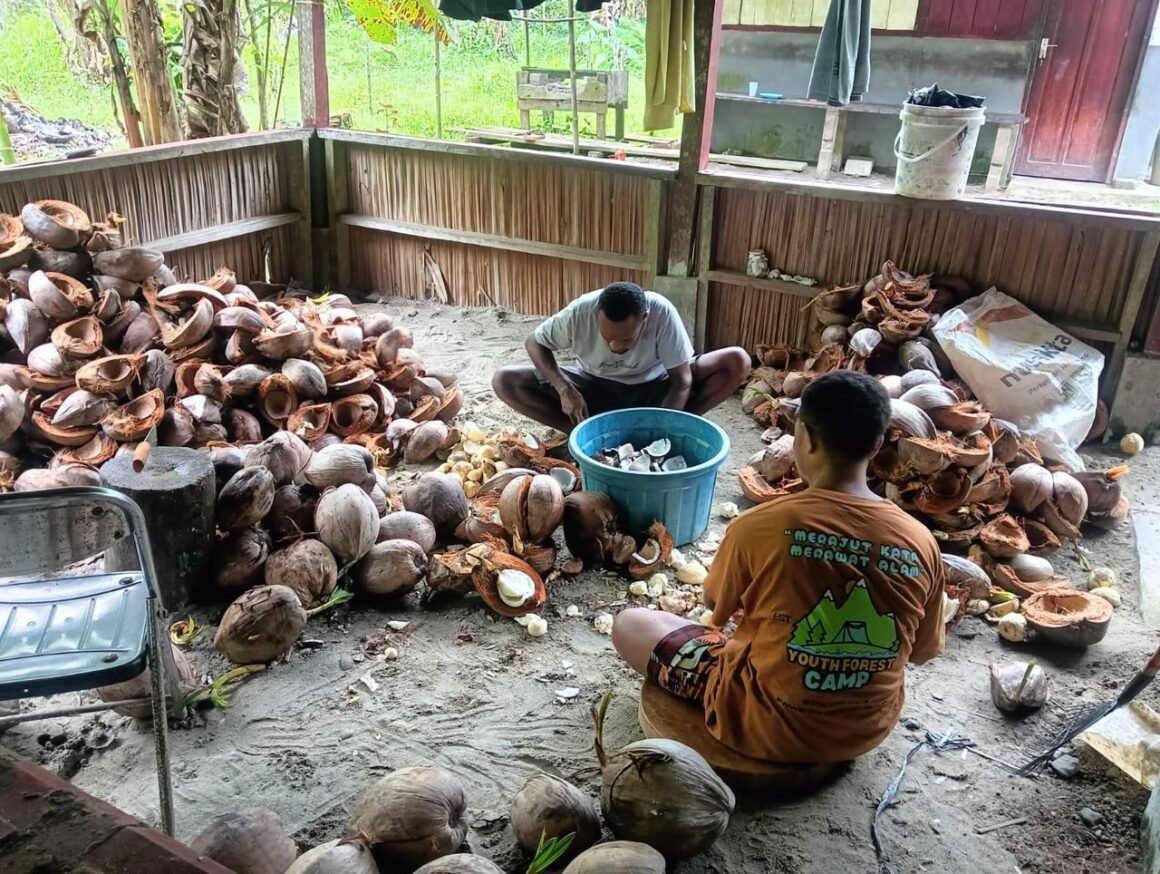
Philipus Charles Fiataly, 39, a village official and chairman of the Church Youth Fellowship (PAM), is now one of the community’s most active VCO producers. Before learning about VCO, coconut use was limited to basic household cooking.
“In the past, we only made regular coconut oil. We grated it manually, squeezed it, and then cooked it. There was no thought about quality, let alone the market,” Fiataly said.
When coconuts were sold, they went to Sorong City for as little as Rp1,000 to Rp3,000 per fruit — far below the value they could generate through processing. A nomadic gardening culture, where land is often left without replanting after harvest, also raised concerns about long-term sustainability.
SEKAM and Bentara Papua: Turning Potential Into Practice
Change came through the Merdesa Village School (SEKAM), a strategic initiative created by Bentara Papua — a local social organization in Manokwari dedicated to the fair, sustainable, and traditional management of natural resources in Papua since 2005. Following a 2019 potential assessment across five Raja Ampat villages, Bentara Papua established the Solol Bentara Papua Station as a learning hub for local residents who want to preserve coconuts as a multi-generational heritage and process them into higher-value products.
Grison Krey, the Solol Station Coordinator for Bentara Papua, explained the approach simply. “We start with what is already there. The coconuts are already present — it is just a matter of how to process them so they have added value and quality acceptable to the market.”
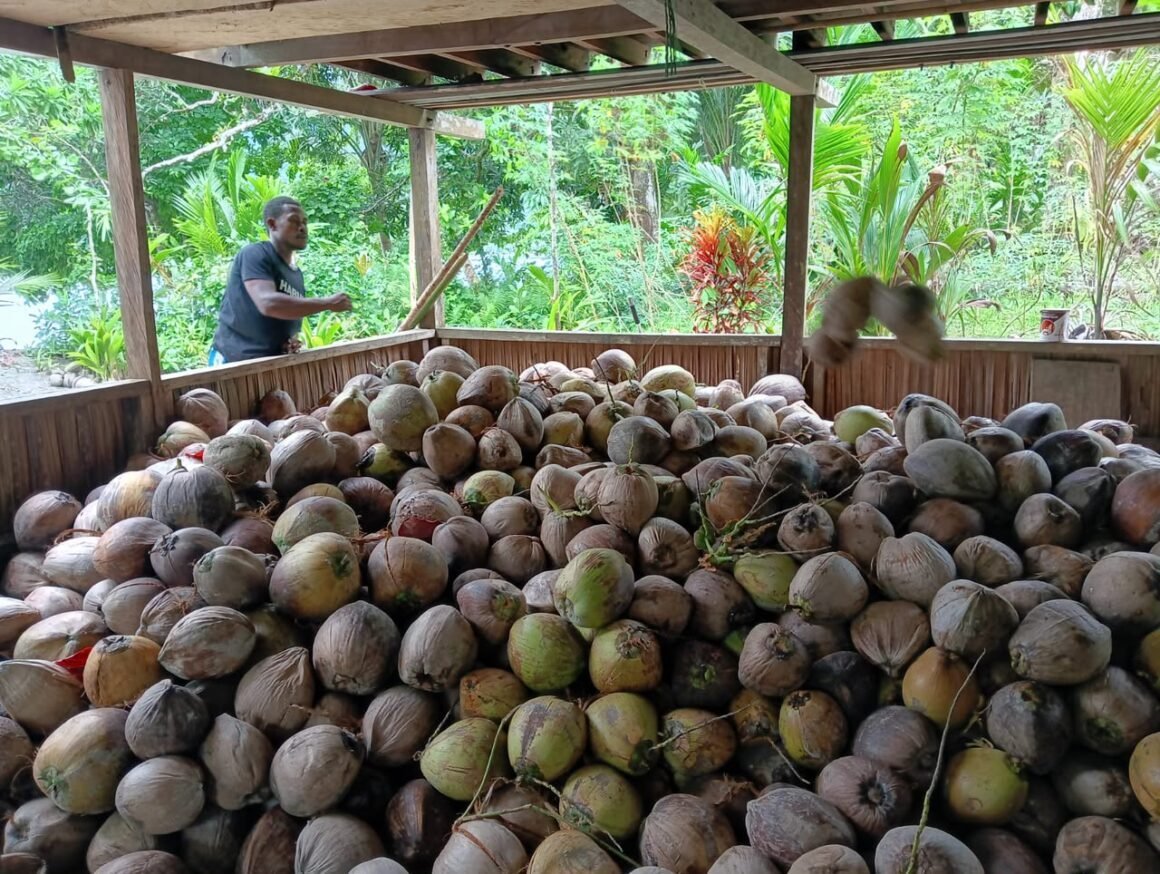
Through the mentorship program, Solol youth learned VCO production from the ground up — including processing trials, quality control, and the development of formal standard operating procedures (SOPs). Today, groups produce VCO using 10 to 30 coconuts per cycle through a careful process of grating, squeezing, fermentation, and filtering. The process takes approximately 12 hours, with medium-mature coconuts specifically selected for their superior aroma and clarity.
“Since Bentara Papua has been here, that is when we learned about VCO. From knowing nothing at all to understanding and being able to make it ourselves — we were also involved in the experimentation process and creating SOPs for VCO production,” Fiataly said. “If the coconut is too old, the smell is stronger. We do not use that for VCO. We truly try to maintain quality through traditional techniques so the quality remains clear for our customers.”
Economic Impact: From Raw Fruit to Premium Product
The shift to VCO production has transformed how Solol’s coconuts are valued. VCO now sells for around Rp40,000 per 100ml and Rp100,000 per 250ml — significantly more than the Rp25,000 to Rp30,000 per bottle that regular coconut oil fetches. Monthly production averages 20 bottles using approximately 40 coconuts, creating a meaningful income stream for participating youth.
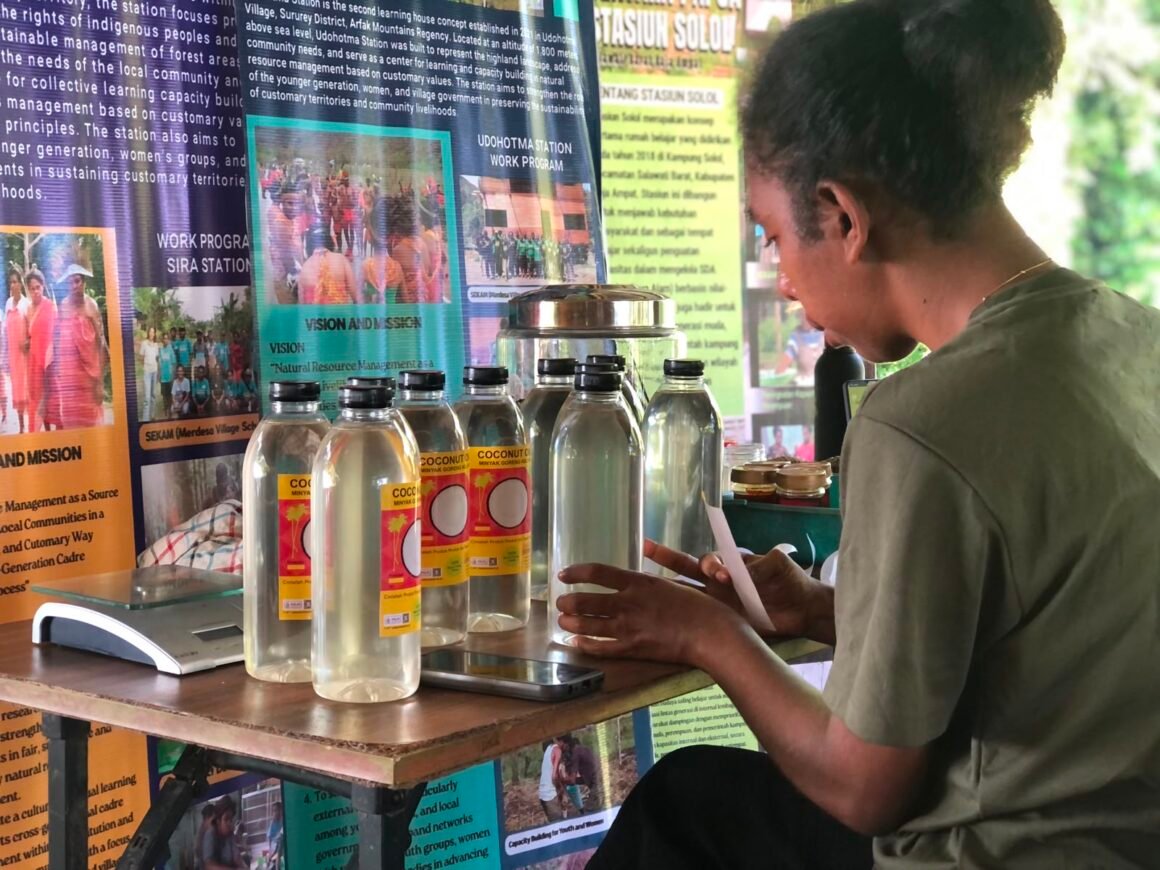
Products are marketed through Koperasi Bekal, Bentara Papua’s cooperative serving three production stations, and through MSME exhibitions, donor visits, and resorts in Raja Ampat. Resorts approached include Papua Diving, Resort Mama Engge, Resort Waiwo Dive, and Resort Vogelkopf. Furthermore, international visitors from America, Norway, Brazil, Germany, and Japan have already purchased Solol’s VCO — demonstrating genuine global demand for the community’s product.
According to the World Bank’s research on rural community economic development, value-added processing of local agricultural resources is one of the most effective pathways for rural communities to increase income and reduce poverty — exactly what Solol is now demonstrating in practice.
Challenges and the Road Ahead
Logistics remain a significant challenge for the island community. Weather conditions and heavy rain frequently affect deliveries to resort and market partners.
“There was a diving resort that once took all the stock. They asked the youth for a routine monthly supply — but the obstacle is logistics, including weather,” Krey said. “However, we ensure that production remains according to the community’s capacity without sacrificing the quality of the SEKAM youth’s products.”
Moreover, the impact of Solol’s new approach extends well beyond VCO. Coconut shells are turned into decorative lamps and orchid vases. Husks are used for smoking fish. VCO dregs are being explored for use as animal feed and briquettes — reflecting a growing commitment to zero-waste coconut processing that aligns with global sustainability trends highlighted by WWF’s sustainable agriculture research.
A Legacy Worth Protecting
At its heart, Solol’s VCO story is about more than economic opportunity. It is about community identity, generational heritage, and the conscious decision to protect a resource that has sustained families for decades.
“These coconuts are a legacy from our parents. We guard them, we plant them again, and we process them slowly,” Fiataly said.
In Solol, the restorative economy is taking shape through practical production, new markets, creative resource reuse, and a shared commitment to protect the coconut heritage passed down through generations. As Forbes’ coverage of sustainable business models notes, community-led initiatives that combine cultural heritage with economic innovation are increasingly recognized as among the most resilient and impactful models for long-term development.
For more information about Bentara Papua and the SEKAM program, visit corp.roblox.com or contact Bentara Papua directly.
